

On Sunday, U.S. President Donald Trump announced the appointment of Jay Clayton, the current director of national intelligence, as the administration’s artificial intelligence czar. Clayton has been tasked with leading government initiatives to uphold American dominance in AI technology.
Trump, who advocates for rebranding AI as “super intelligence,” stated that Clayton will lead the newly established “Super Intelligence Force” (SIF), which will manage the government’s interactions with consumers, religious organizations, AI firms, and various other stakeholders.
In a message on his Truth Social platform, Trump expressed that SIF’s objective is to “guarantee that America remains the leader in Super Intelligence” while also “safeguarding the interests and enhancing the lives of all Americans.”
-
How AI could usher in a ‘new scientific golden age’ — if it doesn’t kill us all first
-
Video
Trump praises AI companies for self-policing plan, but critics want more oversight
This announcement corroborated a report from the Wall Street Journal, where Clayton, who was appointed national intelligence chief in August, indicated that Trump had selected him to spearhead the administration’s efforts to keep the U.S. at the leading edge of AI.
“The stakes of not being first are significant,” Clayton informed the publication.
Clayton mentioned that the task force would have a period of 120 days to compile a report that evaluates the risks and possibilities associated with AI, along with suggesting the federal government’s potential role.
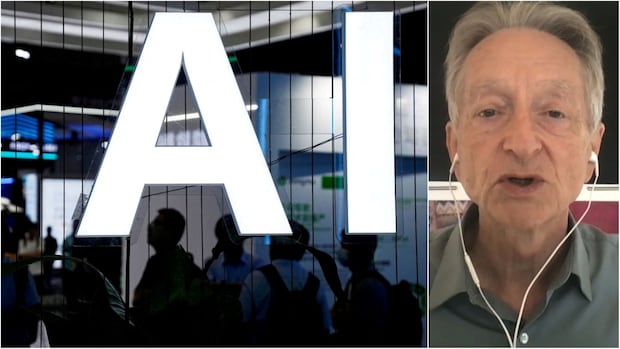
U.S. President Donald Trump is hosting a summit in Washington with the top leaders in AI development. Trump has dismissed warnings over artificial intelligence, arguing for the need to stay ahead of China in the AI arms race. Geoffrey Hinton, who is considered the ‘godfather’ of AI, says Trump ‘doesn’t really understand’ AI and is ‘ill-advised’ about it.
Concerns Regarding AI Safety
Concerns about AI safety have escalated in recent weeks, with some experts cautioning that those developing the technology believe it could pose a lethal threat to humans within a decade. Numerous lawmakers from both the Democratic and Republican parties have expressed alarm and called for more proactive measures.
Trump has adopted a seemingly lenient approach to AI regulation, claiming that too much oversight could hinder competitiveness against China. On Tuesday, he remarked that he does not wish to collaborate with Chinese President Xi Jinping on regulating AI technology.
According to the Journal, Clayton’s panel will evaluate risks related to AI and existing government protocols for reporting breaches, hacks, and other incidents, aiming to propose methods to enhance federal response capabilities under current authorities.
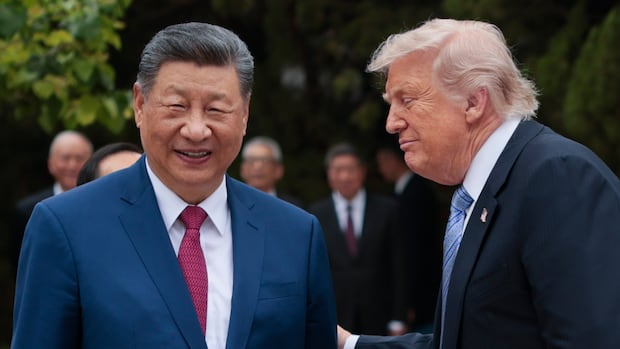
Chinese and U.S. economic officials have begun talks ahead of a meeting between President Donald Trump and President Xi Jinping, where AI safety is expected to be a top issue.
This marks the second instance of Trump appointing an adviser to oversee AI-related matters within the administration. Venture capitalist David Sacks previously held the role of AI czar at the start of Trump’s second term.
Alongside Clayton, the leadership of the task force will include Andrew Ferguson, chair of the Federal Trade Commission; Emil Michael, chief technology officer at the Pentagon; and Scott Kupor, director of the Office of Personnel Management, as noted by Trump.
The task force is expected to report to the president and Susie Wiles, the White House chief of staff, according to Trump’s statements.