

A new national monument called Thunderhead is set to bring celebration and reflection near the Library and Archives Canada building in downtown Ottawa. Instead of rain and lightning, this monument features a roughly nine-meter white column with cloud-shaped openings.
The pillar, known for its inverted cloud design, is lined with mirrored tiles to create a disco ball effect, as explained by Todd Ross, co-chair of the LGBT Purge Fund. Thunderhead and its surrounding park are positioned close to Wellington Street and the Portage Bridge intersection.

Todd Ross, a former Canadian navy member discharged in 1990 due to his sexuality, was part of a lawsuit that funded the monument. (Francis Ferland/CBC)
Thunderhead serves as a recognition of the discrimination faced by 2SLGBTQ+ individuals in Canada, particularly during the lengthy LGBT purge by the government from the 1950s to the mid-1990s.
Ross, who experienced his own discharge from the navy based on his homosexuality, later participated in a successful lawsuit against the government, with the proceeds contributing to the monument’s realization.
A Symbol of Transformation
The monument, designed by a Winnipeg-based team led by Liz Wreford of Architects Public City, symbolizes destruction and renewal through the concept of thunderclouds.
According to Wreford, the absence of a cloud within the structure allows for a play of sunlight creating a kaleidoscope effect, and internal lights simulate lightning flashes during a storm.

Liz Wreford, the lead designer of Thunderhead monument, and its park surroundings. (Francis Ferland/CBC)
The park adjacent to the monument aims to shed light on the history of discrimination against the 2SLGBTQ+ community in Canada. An interpretive wall narrates the persecution of two-spirit individuals by the government, while a healing circle formed by elders from each province and territory stands nearby.
A Place for Contemplation and Festivity
Michelle Douglas, executive director of the LGBT Purge Fund, anticipates diverse experiences at the park, calling it a beacon of hope. Like Ross, Douglas was discharged from the Armed Forces in 1989 and later reached a settlement with the government, ending the military’s purge.
Wreford emphasized the importance of the site as a living monument, acknowledging past discrimination while looking towards a more inclusive future.
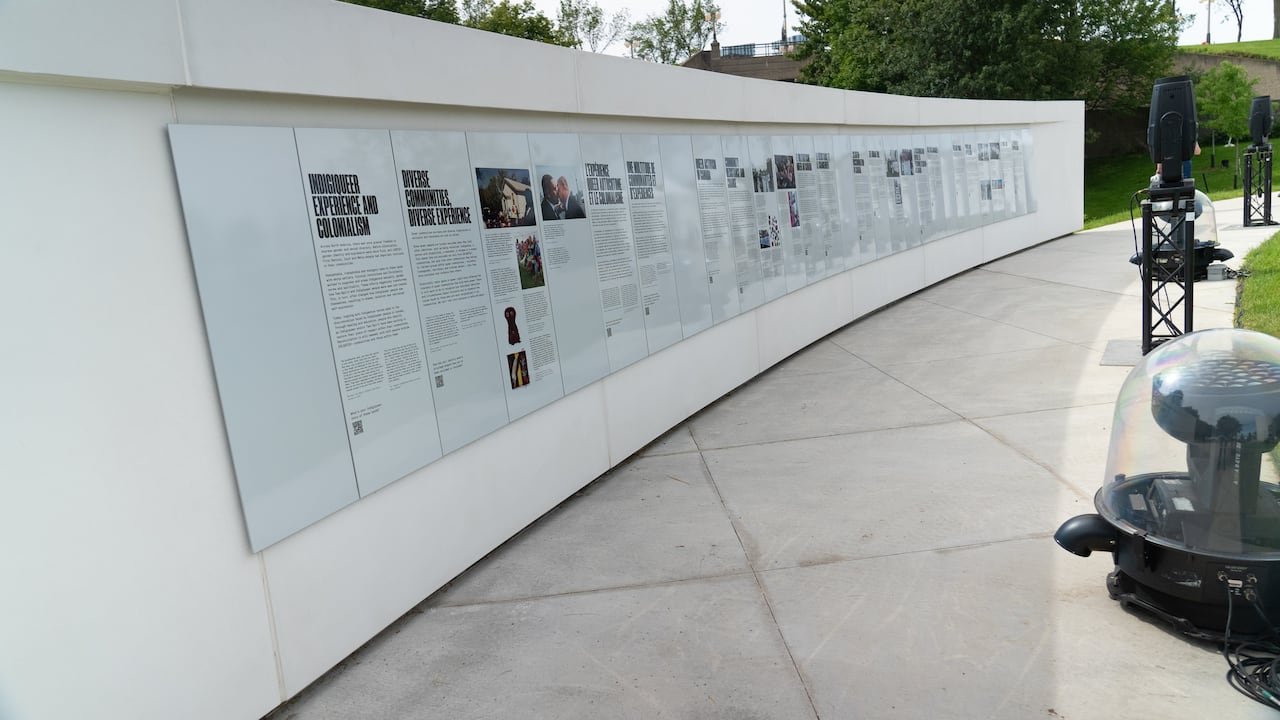
The park surrounding Thunderhead features an interpretive wall showcasing the history of 2SLGBTQ+ individuals in Canada. (Francis Ferland/CBC)
<p class="paragraph-b3GxD html-