

It’s quite a challenge to draw any parallels — particularly regarding the actor’s appearance — between Ted Kaczynski, the notorious ecoterrorist better known as the Unabomber, and Jacob Tremblay, the adorable former child star famed for movies with heartwarming titles like Good Boys and Wonder.
However, there is some context worth noting: We are discussing the portrayal of Kaczynski by the 19-year-old Canadian actor in the Netflix film Unabomber, which was released on Friday.
Yet, it still feels deeply inappropriate to suggest that there exists any substantial similarity between the two. This is why it is surprising when Tremblay himself hints at such a connection voluntarily.
“I found it really challenging to relate to Ted during most of the process. But once I was on set — the script was crafted so beautifully, you could truly empathize with this individual,” he shared during a video call to promote the film.
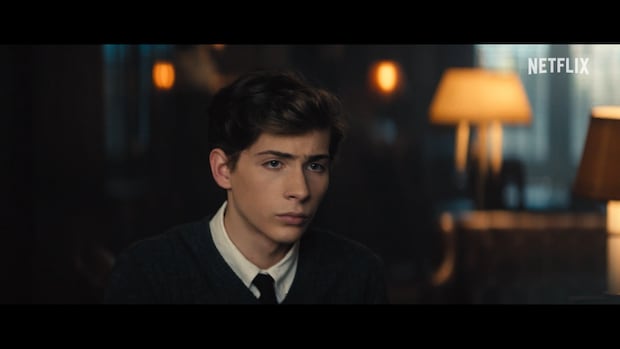
From Room to his turn as Ted Kaczynski in Unabomber, Jacob Tremblay discusses his evolution as an actor, the awkwardness of being the youngest in the room and why the film’s message about the importance of loving and valuing children is so critical.
This notion is rather striking. Despite acknowledging the horrific and unjustifiable acts Kaczynski committed later in his life, Tremblay consistently refers back to his struggle to connect with him.
“What I discovered, and what I really clung to,” he explains, “was the concept of being the youngest individual in the room.”
He is alluding to the surreal beginnings of Kaczynski’s narrative — the primary focus of the Janus Metz-directed film. A math genius, the Chicago native advanced to astonishing academic levels at Harvard University by the age of just 16.
Through that early admission, he eventually became, at that time, the youngest assistant professor ever at the University of California, Berkeley (where he would later plant bombs two decades down the line).
“You know, in this industry, I’m frequently the youngest person present,” Tremblay notes. “So I could somewhat relate to that sense of awkwardness and feeling out of place.”
Deeper narrative
The topic, of course, runs much deeper. At Harvard, Kaczynski was also entangled in one of the most bizarre historical intersections of the previous century.
After being chosen as a susceptible test subject for what many speculate was part of the CIA’s covert MK-Ultra mind control experiment, psychologist Henry Murray fostered the young mathematician’s early theories and cultivated his burgeoning self-esteem.
He then had him restrained in a chair, connected with electrodes, and subjected those same ideas to scathing ridicule. The subjects faced, in Murray’s own words, “intense, sweeping, and personally abusive” critiques that systematically dismantled their confidence.
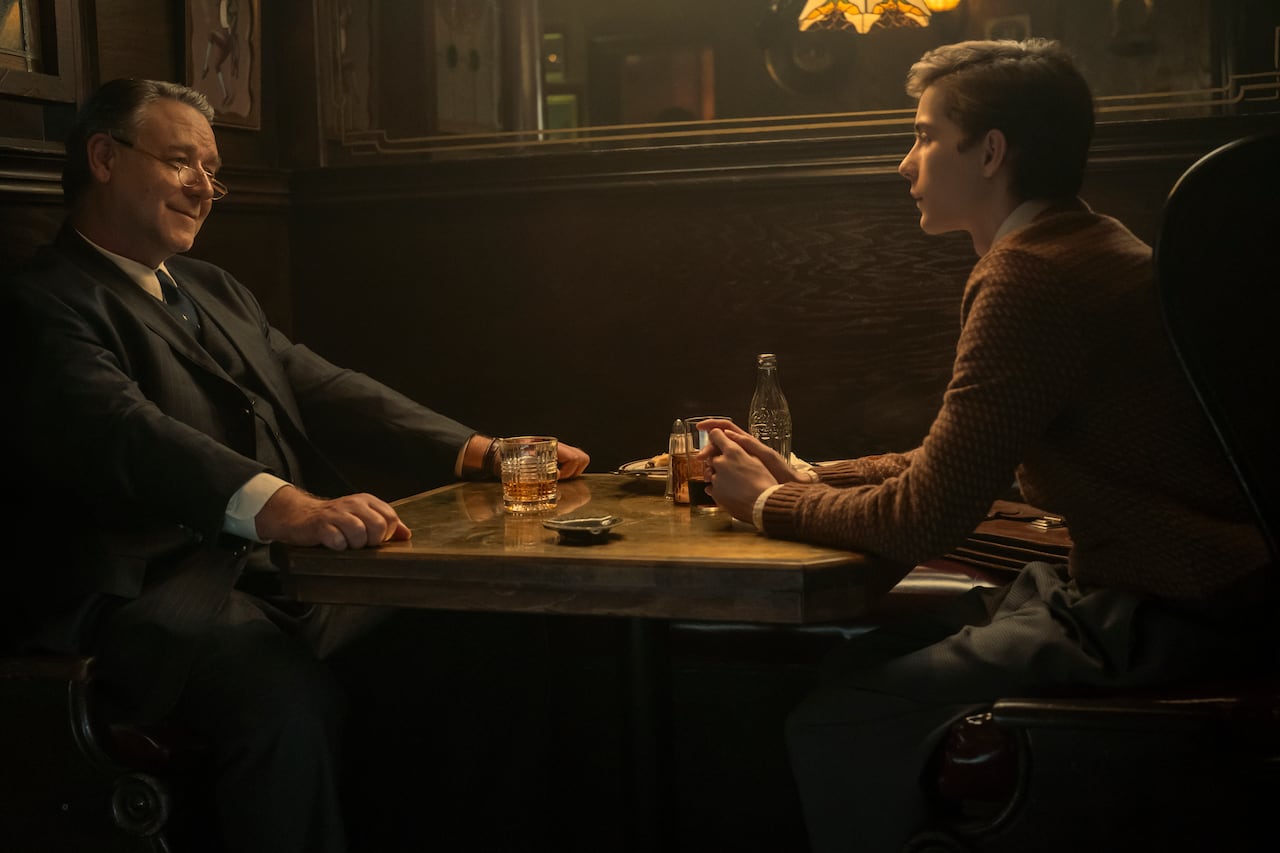
Russell Crowe, left, appears as Henry Murray alongside Jacob Tremblay as Ted Kaczynski in Unabomber. (Philippe Bosse/Netflix)
In the film, the aim is to win the Cold War. If the U.S. can discover how to dismantle young men’s psyches, they could theoretically also manipulate the minds of captured enemy soldiers. And if the objective is to learn how to obliterate an individual’s self-esteem, who better to start with than a gifted yet insecure child?
The resulting villainy we see on screen marks a departure from Tremblay’s usual roles, which he describes as an exciting shift. He indicates that his film career is centered around his ambition to never portray the same character twice while exploring a variety of genres.
However, this role bears a personal connection that he returns to. If one subscribes to some narratives, Kaczynski’s earlier experiences were his rosebud, although he had long dismissed the idea that those sessions impacted him significantly. According to the film, they represent a grave betrayal of society’s obligation to safeguard children — resulting in a man who would subsequently send lethal letter-bombs to figures of authority for decades.
-
REVIEW
Robert Pattinson’s Primetime hates Chris Hansen
-
Clement Virgo says Steal Away is his most ambitious work yet
Considering this role follows closely after Tremblay’s performance as a young boy coerced into armed resistance against the federal government in Sovereign, the trend is hard to overlook. He describes the theme of “a young, malleable mind, compelled by trauma to commit violent acts” as the core message of Unabomber.
“It’s crucial to treat children with love … and to instill in them a sense of their worth,” he emphasizes. “Because on the other hand, if a child lacks love, it can be harmful and lead to violence. It truly does.”
This discussion arises as the industry he grew up in faces another moment of introspection. Following the overdose death of former child actor Hayden Panettiere earlier this year, Canadian actor Alison Pill penned a New York Times op-ed labeling child acting as “exploitative and nonconsensual,” calling for a complete ban.
Nicky, Ricky, Dicky & Dawn‘s Casey Simpson and others countered against the ban — but expressed that elevating a child to stardom virtually guarantees they will later grapple with feelings of inadequacy, regardless of their adult successes.
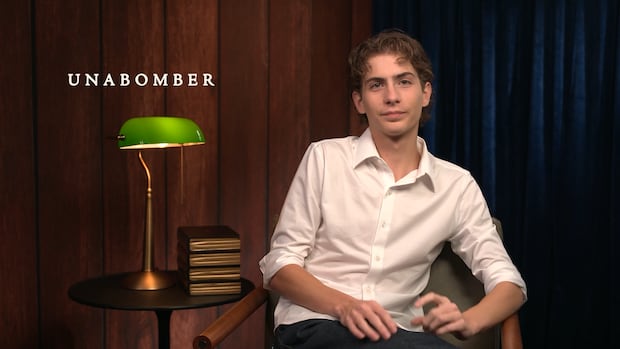
Beyond acting, Jacob Tremblay reveals his deep love for the collaborative nature of being on set and his commitment to shadowing the crew to learn the art of storytelling from behind the camera.
Tremblay does not directly make this comparison. Reflecting on his childhood, he recalls his obsessive fascination with acting: After landing his first film role in Smurfs 2 at the age of five, he remembers his mother asking if he wanted to continue in that direction. Not only did he affirm his desire — he stated that he could not envision doing anything else.
That passion has persisted. Although Tremblay briefly considered attending film school, director Mike Flanagan suggested he should instead spend as much time on set as possible to nurture his growing interest in writing and directing.
Nonetheless, despite the clarity of his path into acting, the question of whether he truly made that choice remains complex.
“It’s challenging to declare, ‘Yes, I really wanted to do this at five years old,'” he explains. “Because I doubt I could fully grasp what it meant to be an actor or part of the film industry at that age.”
-
Q with Tom Power
Jacob Tremblay on child stardom, The Little Mermaid and Justin Bieber
-
Child actor Jacob Tremblay hopes Hollywood bites on his zombie script
This brings up the challenging comparison: Kaczynski, the young man thrust into immense success too early, ultimately faces destruction. Is there any correlation to Tremblay’s journey — achieving fame with his role in Room at just eight years old — even if he didn’t fully comprehend what he was embarking upon?
“You definitely try to find those connections. I can only envision how drastically different my life would be without this career. It’s a daunting thought, right?
“It truly makes me empathize with someone like Ted, who possessed so much talent at a young age and had immense potential,” he reflects.
“I sincerely hope that viewers of this film contemplate this moving forward — about gifted individuals, those with abilities. And how they wish to uplift and nurture them in life, rather than exploit them.”