

Thoroughbreds snort as they toss their heads, while restless hooves create a rhythmic pound against the freshly tilled sand on a sweltering August afternoon.
The loud voice of an announcer blares over the speakers, prompting spectators to gather, leaning against or even climbing atop the white fence that borders the track.
Excitement fills the air at Onion Lake Cree Nation’s Heritage Park, located 50 kilometers north of Lloydminster on the Saskatchewan side, as the fifth and concluding day of what organizers refer to as Indian Relay Racing is about to commence.
“The turnout has been incredible, with full stands every day,” said race organizer Candy Jackson. “With four relays happening simultaneously and 14 remarkable teams — truly humble teams — choosing Onion Lake, I am grateful for that.”
This team sport consists of riders racing laps and switching horses. Each rider completes three laps without a saddle, riding a different horse for each lap. The transitions are often intense, requiring riders to dismount and place both feet on the ground before jumping onto the next horse.
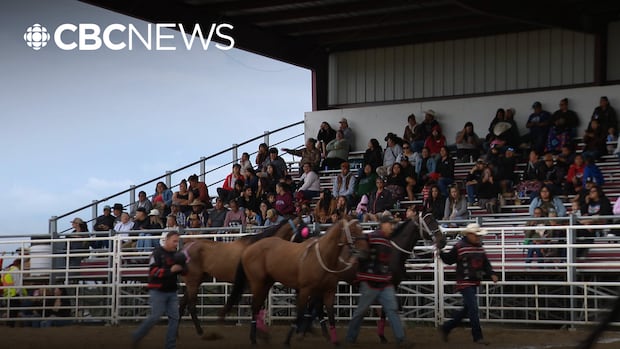
This sport involves racing down a dirt track on the bare backs of thoroughbreds and is gaining popularity across the nation. Lexi Freehill reports from Onion Lake Cree Nation, highlighting that it represents much more than just fast horses and fierce exchanges; it’s a cultural connection.
Unexpected crashes among riders, overly eager or stubborn horses, and falls can dramatically alter the course of a race in mere moments.
Over the past ten years, the sport has been expanding throughout the Prairies. Races are becoming essential summer events, attracting large audiences and increasing cash prizes.
Tyson Head, a farrier from Mistawasis, Sask., has been involved in horse racing for his entire life. Since establishing his team, T.K. Farrier, in 2017, he has witnessed a surge of enthusiastic fans and substantial cash rewards becoming standard.
“We’ve been in this for nine years now, achieving numerous championships and earning many titles along the way,” he shared with CBC News.
Head noted that the increasing popularity of the races is drawing more sponsors, which in turn generates greater interest from aspiring participants eager to enter the sport.
“When I first began, there were only 16 teams,” he recounted. “Now, there are over 40 teams actively competing.”
According to Head, this growth facilitates further development, as newcomers learn from seasoned teams and eventually establish their own, welcoming more aspiring racers and sharing valuable expertise and honed riding skills.
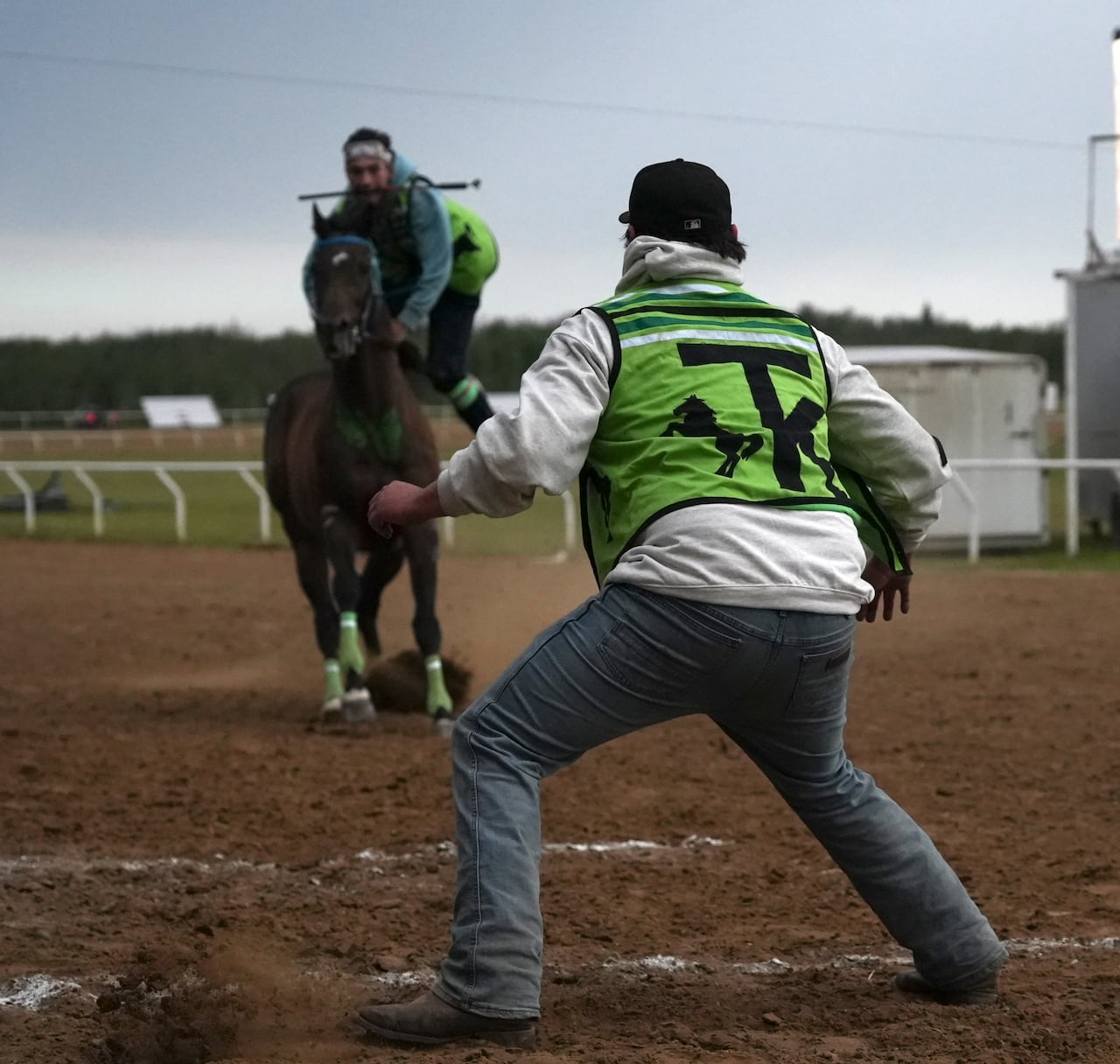
A backholder for T.K. Farrier adjusts his stance as he readies to catch the reins of a swiftly moving horse while rider Carter Houle prepares for the third and final exchange in the championship race. (Lexi Freehill/CBC)
However, while the rapid rise of the sport brings advantages, Jackson, who is from Goodfish Lake, pointed out that increased popularity can create challenges.
“Initially, we began as wahkohtowin, representing unity and family,” Jackson explained. “We supported each other along the way; whenever someone faced difficulties, we ensured they reached their destination.
“As time passed and the events grew larger… the sense of unity diminished, and people began to change. Everyone focused on the championships.”
As an organizer and the mother of Kal “Buffalo Boy” Jackson, one of the early Canadian relay riders, Jackson aims to maintain the connection of the races — and the riders — to their cultural roots.
Beginning her events with a pipe ceremony and prayers is one way Jackson ties the sport to tradition. Some participants, such as 19-year-old cousins Kyla and Kayden Stanley, also prepare with prayers and smudging for themselves and their horses prior to racing.
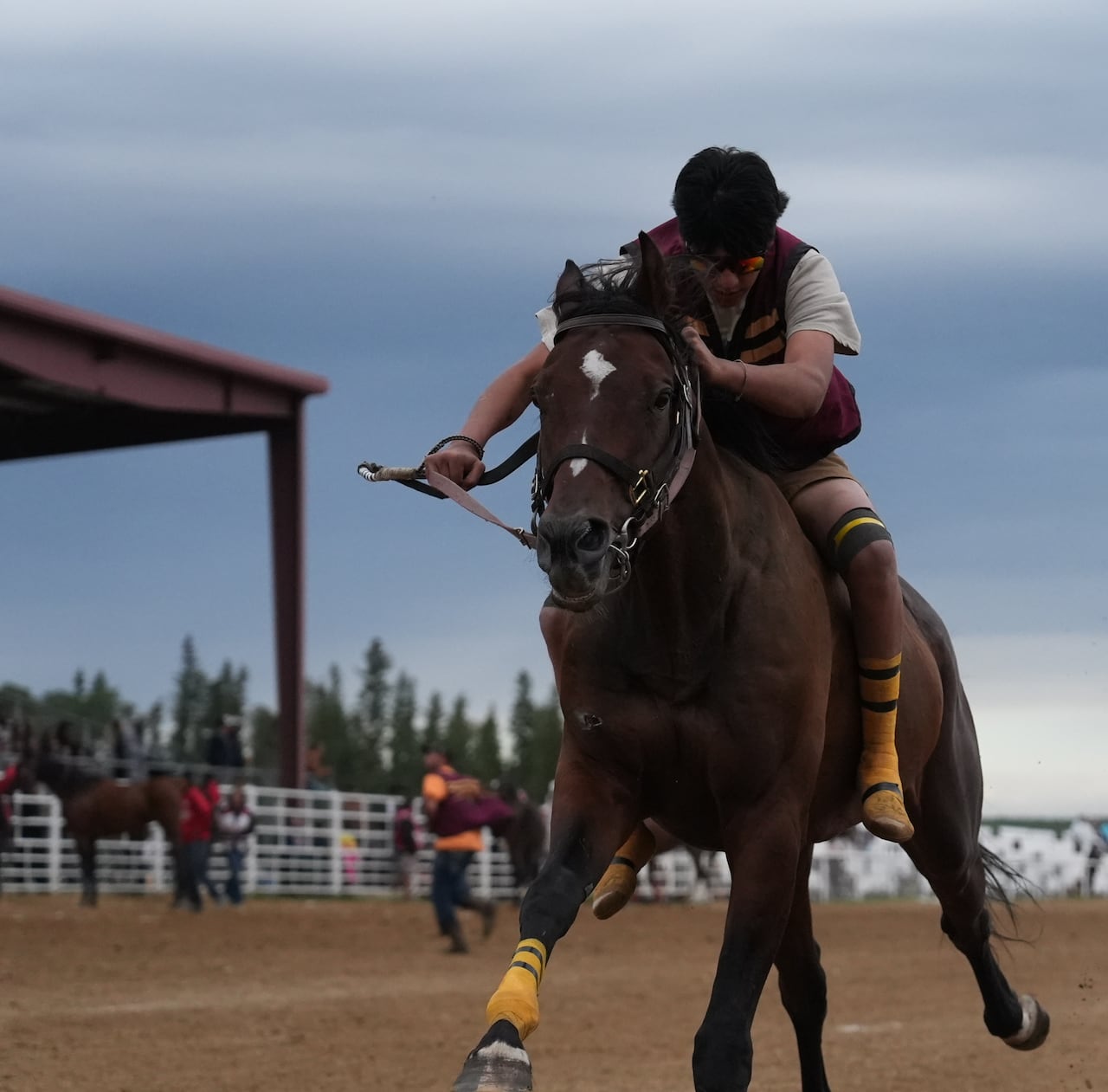
19-year-old jockey Kayden Stanley from Onion Lake Cree Nation aspires to display his talents at the Calgary Stampede in the future. (Lexi Freehill/CBC)
“[It] helps me feel much more calm and secure out there,” Kyla Stanley remarked to CBC News.
“This sport can be quite hazardous if you’re reckless,” Kayden Stanley commented. “But with a safe approach, it’s truly an exhilarating experience.”
Beyond the cash rewards and the prestige of championship titles, each rider has the chance to remain true to their heritage and reflect on their origins, Jackson noted, mentioning that many of the young racers have personal stories of adversity.
“The true essence of the sport is that the riders possess a talent; the gift is derived from the horse,” she explained. “It embodies their healing spirit.
“The spirit of the horse has brought them back here, returning them to their identities as true warriors.”