

At the conclusion of last week, Stelco Holdings terminated the employment of 85 workers, as reported by union representative Ron Wells. The previous week saw the issuance of 90 layoff notifications by the company, he noted.
The U.S.-owned steel manufacturer claims that its strategy to reduce its workforce by up to 500 employees in Hamilton and Nanticoke, Ontario, is merely a temporary impact of the Canada-U.S. trade conflict. However, advancements in technology and shifting demand, compounded by tariff-related challenges, are contributing to the reduction of the industry’s previously substantial workforce.
Statistics Canada reveals that the number of jobs in Canada’s primary steel manufacturing sector has declined from nearly 29,000 in 2003 to around 14,000 as of July.
Wells, who is both the president of United Steelworkers Local 1005 and a 47-year veteran at Stelco, recalls that when he began working there, the workforce numbered about 14,000.
“Producing a ton of steel today requires significantly fewer workers,” Wells told CBC News. “The process is now much more efficient.”
U.S. regulatory documents indicate that Cleveland-Cliffs, the Ohio-based parent company of Stelco and the largest flat-rolled steel producer in North America, saw its total employee count decrease from approximately 30,000 to about 25,000 between December 31, 2024, and December 31, 2025.
This year’s job reductions included around 600 layoffs in Dearborn, Michigan, as Cleveland-Cliffs paused operations at a large blast furnace. CEO Lourenco Goncalves attributed this decision to weak demand from North American automotive manufacturers.
Consequently, an additional 600 jobs were lost in Minnesota to align the company’s raw ore production with the lowered demand from blast furnaces.
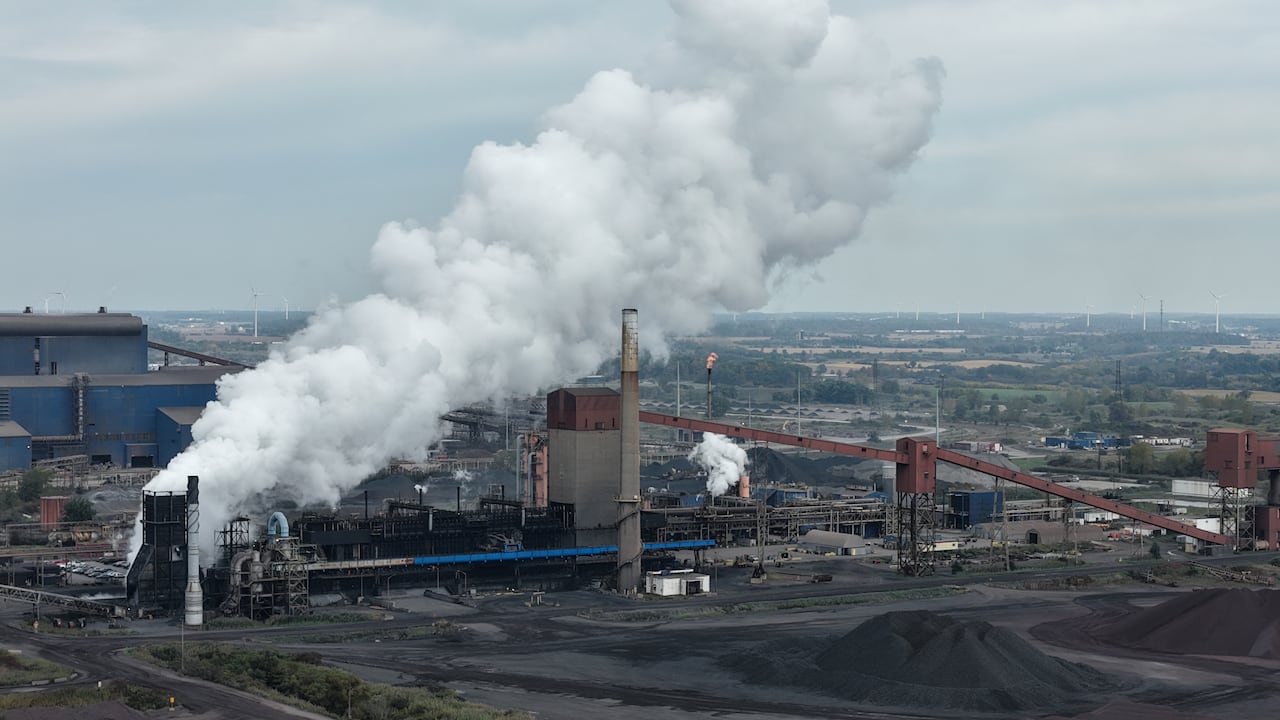
An aerial image of Stelco’s facility in Nanticoke, Ont. (Patrick Morrell/CBC)
In late September, following U.S. President Donald Trump’s executive order imposing tariffs of up to 50 percent on certain steel and aluminum imports from Canada, Stelco announced plans to lay off up to 500 workers at its two Ontario facilities.
This led to a current dispute between the company and the federal government regarding Stelco’s commitments under the Investment Canada Act to retain a minimum number of employees within Canada.
However, the uncertainty surrounding jobs is not limited to Stelco’s employees alone.
In December, Algoma Steel issued layoff notices to approximately 1,000 employees, nearly a third of its workforce. The Sault Ste. Marie, Ontario-based company cited U.S. tariffs as the reason for diminishing its export competitiveness, while the announcement coincided with its initiative to accelerate the transition to more environmentally friendly and less labor-intensive electric-arc furnace production.
This followed ArcelorMittal Long Products Canada’s announcement of the permanent closure of its Parkdale wire-drawing facility in Hamilton in June 2025. ArcelorMittal S.A. is recognized as the second-largest steel and mining company globally.
“Despite our best efforts, persistent economic challenges, rising steel imports into Canada, and prevailing market conditions made it evident that we had to reduce our operational footprint,” stated company spokesperson Jean-Philippe Grou to CBC News at that time.
Calls to address cheaper foreign steel imports
In a letter to Industry Minister Mélanie Joly, which was acquired by The Canadian Press, Stelco president Paul Simon expressed concerns that imports of cold-rolled and coated steel constituted 45 percent of the market share for those products.
Wells argues that the federal government is not doing enough to protect Canadian manufacturers from less expensive foreign imports. He advocates for an increase in tariff-rate quotas to restrict the influx of foreign steel competing with Canadian offerings.
“There’s excessive production coming from overseas,” he stated. “It undermines prices in Canada.”
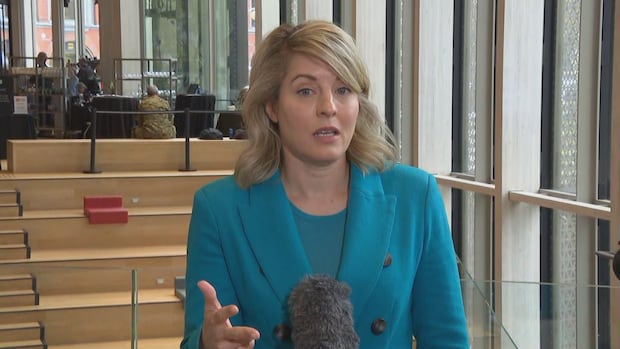
Industry Minister Mélanie Joly states that shifting market conditions cannot be used by Stelco as an excuse to violate its commitments to the Canadian government and workforce. Potential outcomes from negotiations could entail ‘financial penalties’ or ‘forced divestiture’ by the U.S. owners, Joly mentioned.
A recent forecast from the research firm Wood Mackenzie illustrates the disparity between the steel sectors in the U.S. and Canada. It anticipates a 4.5 percent increase in U.S. steel production this year, despite a decline in domestic demand. Senior research analyst Tiago Vespoli foresees a different fate for Canada.
“The rise in U.S. steel tariffs to 50 percent has considerably disrupted established trade patterns, creating a scenario where U.S. steel manufacturers can ramp up production and capture market share, while Canadian producers are experiencing mounting pressure on their export volumes and capacity utilization,” he stated on Thursday.
Wells expressed optimism regarding a recent rise in spot prices for galvanized steel—a product Stelco is shifting away from in Hamilton.
“Galvanized steel prices have now reached $1,800 per ton in Canada, marking a significant improvement from six months ago. This is why the layoffs and the halting of the cold mill and coated steel operations are quite perplexing. It seemed that prices for coated products were beginning to recover. We suspect this layoff is partly a strategy to prompt Carney to take action and reach a trade agreement,” he noted.
“We believe the intent is to create a favorable image for Trump in the midterms, showcasing that his tariffs are effective and that Canadian steelworkers are being laid off.”
Goncalves has openly endorsed Trump’s tariff policies, which has drawn sharp criticism from both Joly and Prime Minister Mark Carney.
As a court battle between Cliffs and Ottawa appears increasingly likely, Wells remains hopeful that Stelco will reinstate the laid-off employees.
“It’s challenging to take their assurances at face value anymore,” he admitted.
“I firmly believe these layoffs are temporary. I anticipate that this trade issue will be resolved soon, allowing our members to return to work.”