

Being the sole G7 country lacking its own launch capabilities, Canada is keen on developing a domestically-produced rocket.
Several Canadian firms are competing to establish a national pathway to space as swiftly as possible—coinciding with concerns from some SpaceX clients about the company’s potential reduction in orbital launches.
However, these rocket manufacturers are tackling a costly endeavor under strict timelines and fluctuating government priorities, making the journey to space quite challenging.
Without the capability to launch rockets independently, both private enterprises and governmental bodies in Canada are reliant on external providers to deploy their satellites into orbit. Predominantly, these providers are American, particularly SpaceX, which was responsible for launching all 12 Canadian satellites that went up in 2025, as reported by Canadian industry outlet SpaceQ.
Marc Boucher, founder of the Canadian space publication SpaceQ, emphasizes the importance of these technologies. They are essential for telecommunications, military applications like threat detection, and for monitoring earth phenomena such as wildfires.
Boucher warns that without control over its own launch capabilities, Canada risks foreign entities potentially refusing to launch Canadian technology.
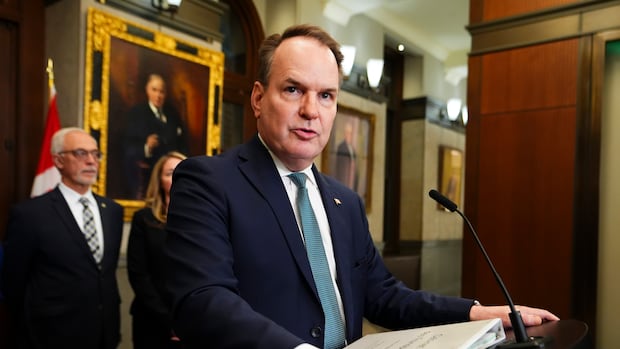
On Tuesday, government House leader Steven MacKinnon introduced the Canadian Space Launch Act as a framework for developing Canada’s own space launch capabilities. ‘This is about giving ourselves the options and the capability of protecting Canada, making sure our Armed Forces stay current and on pace with the rest of the world,’ MacKinnon said.
A sovereign solution
In February, the Canadian government identified space as a critical sovereign capability in its Defence Industrial Strategy and proposed legislation in April allowing the government to permit launches from Canadian territory, pending approval.
Recent months have seen an influx of funding, including $8.3 million each for three Canadian firms engaged in rocket development, as part of a multi-year initiative aimed at achieving light-lift rocket capabilities by 2028.
One of these firms, NordSpace, established in 2022, is dedicated to developing satellites and robotic space technologies, along with the necessary launch pad and rocket. Although its initial suborbital rocket test in 2025 did not succeed, the company is preparing to attempt another launch soon, potentially within weeks.
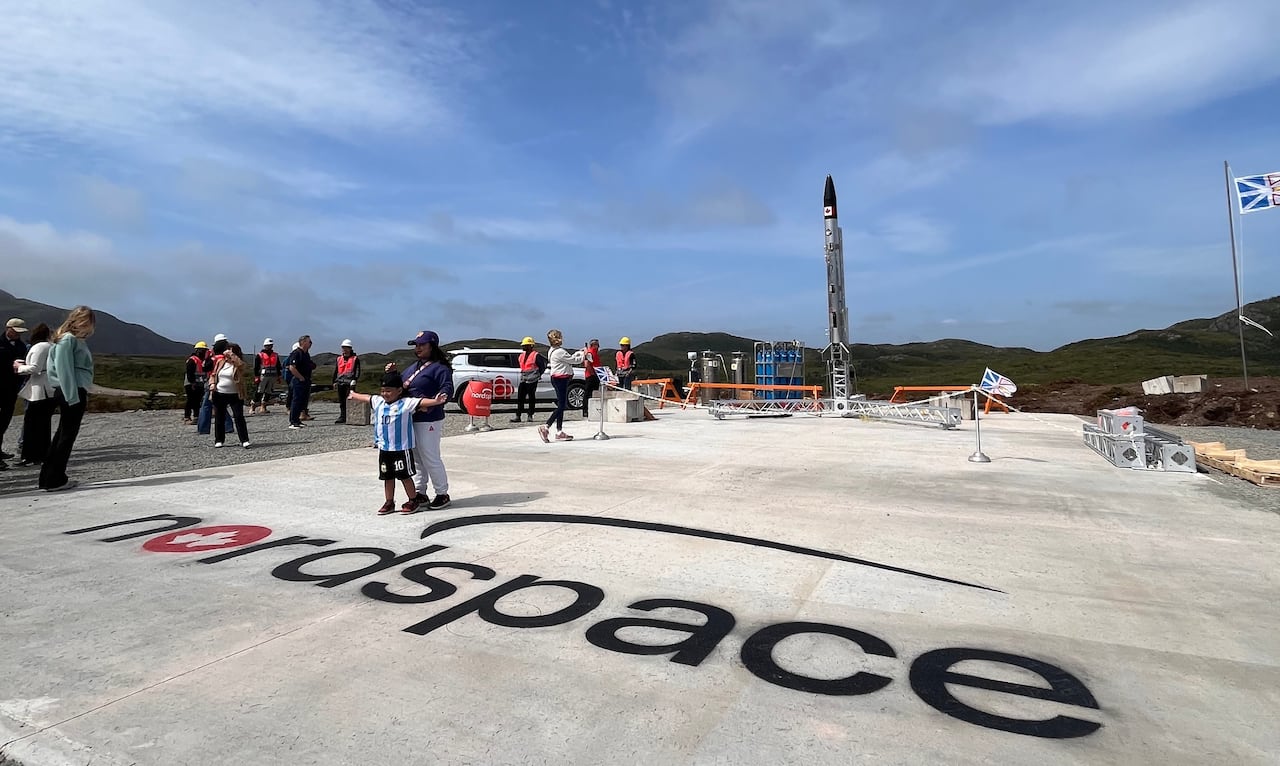
NordSpace’s suborbital rocket on the launchpad in 2025. The company’s first attempt to launch the vessel in summer 2025 was unsuccessful, but it’s preparing to try again soon. (Peter Cowan/CBC)
Reaction Dynamics is another participant in this initiative, having been focused on a distinctive engine design since 2017.
Both NordSpace and Reaction Dynamics aim to achieve orbital launches by 2028, in alignment with the government’s objectives.
Completing the trio is Canada Rocket Company, the newest entrant into the field.
CEO Hugh Kolias established Canada Rocket Company late last year with aspirations of creating a medium-lift rocket capable of transporting numerous satellites into low Earth orbit simultaneously, utilizing nine methalox-fueled engines.

Hugh Kolias, founder of Canada Rocket Company, is pictured in the company’s Etobicoke headquarters on Sept. 23. With newfound attention from the Canadian government on space sovereignty and the help of private funding, Kolias says he is confident his team can make it to space by 2032. (Laura MacNaughton/CBC)
The company has recruited a significant number of engineers, many hailing from leading rocket manufacturers like SpaceX and Blue Origin, and is constructing a $30-million testing facility in London, Ontario, to assist in achieving its objectives.
Developing such a rocket will require substantial time and numerous tests, with the inaugural launch not anticipated until 2032.
Kolias notes that his firm has secured $22 million in private investment in addition to government funding.
Both he and Boucher emphasize that funding has historically been a significant barrier in Canada, complicating the already challenging process of rocket development.
“We possess the necessary skill sets … as Canada produces many exceptional engineers. However, funding has been a constraint,” Boucher remarked.
Nevertheless, with the influx of private and public financial support, Kolias is hopeful that the situation is improving, even if some other industry leaders remain cautiously optimistic.

Executives of Canada Rocket Company and other attendees toss the first shovels of dirt at the groundbreaking of the firm’s test facility under construction in London, Ont. (Submitted by Canada Rocket Company)
Fly away, Falcon 9
Simultaneously, SpaceX is planning to eventually phase out its Falcon 9 rocket as it shifts to a larger vehicle known as Starship, according to Elon Musk. This is raising concerns for clients who depend on the company for satellite launches, yet it could also present opportunities for new rocket manufacturers.
The Falcon 9, a reusable, medium-lift rocket, is responsible for deploying SpaceX’s own Starlink satellites as well as those of other entities at a price.
Reports indicate that the company has begun refusing satellite clients seeking to launch on the Falcon 9 beyond 2028 as it pivots to the new rocket. This is particularly alarming for smaller companies that rely on SpaceX’s rideshare program, which enables multiple firms to launch one or two satellites each on a shared rocket.
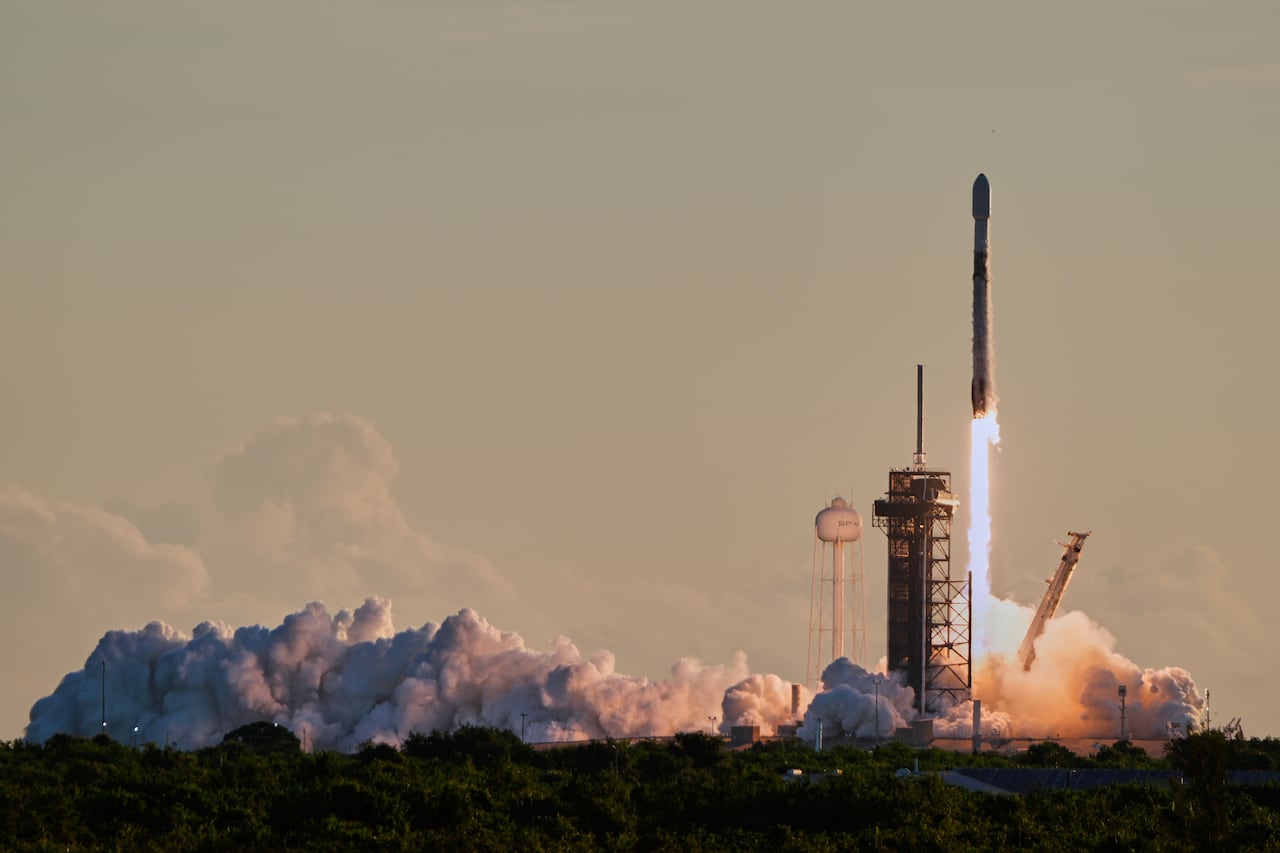
A SpaceX Falcon 9 rocket lifts off from Kennedy Space Center in Cape Canaveral, Fla., on Sept. 24, 2025. The Falcon 9 has become the workhorse of the launch industry, and its eventual phaseout has some customers worried about how they’ll get to space. (John Raoux/The Associated Press)
Kepler, a Canadian satellite communications firm, has launched most of its 33 satellites using the Falcon 9.
CEO Mina Mitry, who advises Canada Rocket Company, anticipates that rival companies—such as Rocket Lab, with which he has already secured a future launch—will help meet some of that demand. However, smaller players may experience challenges due to reduced rideshare opportunities.
“If you aim to launch one, two, or three satellites on an experimental basis, the barriers to entry have significantly increased,” Mitry stated. “This poses a substantial issue for the industry.”
The winding down of the Falcon 9 makes the establishment of a Canadian rocket manufacturer even more crucial, Mitry asserts.
With its medium-lift rocket targeting the same market as the Falcon 9, Kolias hopes Canada Rocket Company can seize some of the market share that SpaceX will leave vacant as it transitions to the larger Starship vehicle.
A long way from liftoff
At NordSpace, CEO Rahul Goel expresses a more cautious optimism.
Since childhood, Goel has aspired to build rockets, but he spent the initial decade of his career establishing another company and generating his own funds to invest in NordSpace “as no one would back me.”
While he views the growing attention toward his sector and the funding received as positive, he remains concerned it may dissipate soon, prompting him to expedite the establishment of launch capabilities.

Rahul Goel, founder and CEO of NordSpace, expresses pride in launching an entirely Canadian-made rocket from Canadian soil, especially during a period of rising nationalism. (Anand Ram/CBC News)
“I’ve witnessed how swiftly circumstances can shift, and I recognize how rapidly they can revert,” Goel remarked.
According to Boucher of SpaceQ, achieving a light-lift rocket capable of reaching orbit could cost at least $50 million, with even higher expenses for a medium-lift rocket. He indicates that additional private and public investment will likely be necessary for each company to reach orbit—especially given the ambitious timeline of 2028.
“This is not a short-term project. It’s a long-term endeavor,” Boucher asserted. “It took SpaceX … years before they achieved their first successful launch. It will take several years before we witness regular launches from Canada.”